Executive Strategy Overview
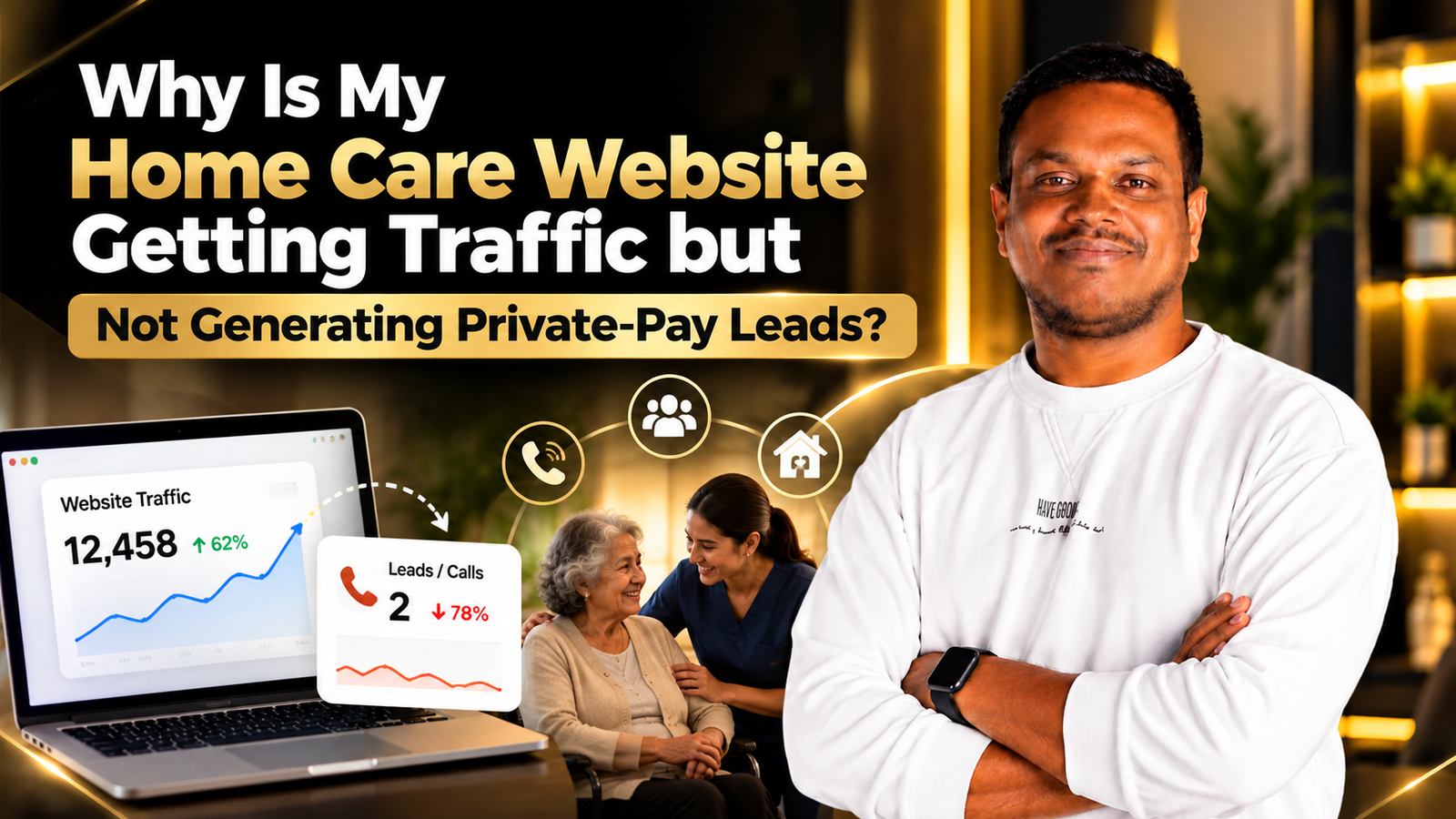
If your home care website is getting traffic but not generating qualified leads, the problem may not be traffic volume.
Your visitors may have the wrong search intent, or your website may not clearly communicate your services, service areas, private-pay options, trust signals, and next step.
For a home care agency, the real goal is not more visitors. It is more qualified inquiries, consultations, and potential private-pay clients.
Why Is My Home Care Website Getting Traffic but No Leads?
I look at this problem in two stages.
First: Are the right people reaching the website?
Second: Does the website give those people enough information and confidence to contact the agency?
A home care website can attract hundreds of visitors without producing meaningful business if most searches are informational, employment-related, outside the service area, insurance-related, or otherwise unlikely to become clients.
Before redesigning the website or chasing more traffic, understand who is already visiting it.
Traffic and Search Intent Are Not the Same Thing
Consider two Google searches:
“What is home care?”
and
“private home care near me”
Both could bring someone to a home care website, but their intent is very different.
The first person may simply be researching home care.
The second may be actively looking for care for themselves or a family member.
That is why home care search intent matters.
High-intent searches may include:
✓
* home care agency near me
✓
* private home care near me
✓
* senior home care near me
✓
* elderly home care services
✓
* companion care near me
✓
* dementia home care near me
✓
* personal care services near me
✓
* 24 hour home care near me
Ranking for hundreds of informational keywords is not automatically more valuable than visibility for a smaller group of searches that generate qualified inquiries.
Does Your Website Immediately Explain What You Provide?
Once qualified traffic reaches your website, the next job is removing uncertainty.
Within a few seconds, a visitor should understand:
1. What home care services you provide
2. Who you help
3. Where you provide care
4. Whether your services fit their situation
5. How to contact your agency
If the homepage only says something generic such as “Compassionate Care You Can Trust,” families still have questions.
Do you provide personal care?
Companion care?
Dementia care?
Respite care?
24-hour care?
Do you serve their city?
Do you accept private-pay clients?
Clear information helps families decide whether your agency is relevant before they contact you.
Separate Your Major Home Care Services
One generic services page can make both SEO and conversion more difficult.
If personal care, companion care, dementia care, and respite care are important parts of your business, each may deserve dedicated information.
Depending on what your agency genuinely provides, separate pages may make sense for:
✓
* Personal care
✓
* Companion care
✓
* Senior home care
✓
* Respite care
✓
* Dementia and Alzheimer's care
✓
* Post-hospitalization assistance
✓
* 24-hour home care
✓
* Live-in care
The objective is not creating pages simply to target more keywords.
Each page should answer the questions of a real family evaluating that specific service.
Make Your Home Care Service Area Obvious
Local intent is especially important for home care agencies.
A family should not have to search through several pages to determine whether your caregivers serve their location.
Clearly communicate the cities, counties, or communities your agency genuinely serves.
Do not create dozens of nearly identical location pages simply to target more cities.
Create useful location content where your agency actually operates and where the page can provide meaningful information to potential clients.
Private-Pay Families Need Trust Before They Contact You
Choosing a home care provider can be a significant decision.
A family may be looking for someone to assist an aging parent, a person living with dementia, or a loved one who needs additional support after returning home.
Your website therefore needs to do more than ask visitors to call.
Useful home care trust signals can include:
✓
* Real caregiver and team photos
✓
* Genuine client or family reviews
✓
* Clear business information
✓
* Detailed service descriptions
✓
* Caregiver qualification information where appropriate
✓
* Consistent contact information
✓
* Clear service areas
✓
* An understandable consultation process
✓
* Relevant licenses or credentials where applicable
Avoid unsupported medical, safety, or quality claims.
Clearly explain what your agency actually provides and what families can expect.
Make Contacting Your Home Care Agency Easy
A qualified visitor should never have to search for the next step.
Your phone number and primary call to action should be easy to find, especially on mobile.
Depending on your actual process, calls to action could include:
Schedule a Care Consultation
Speak With Our Care Team
Request Home Care Information
Check Care Availability
The wording should reflect what actually happens after someone contacts your agency.
The objective is simple.
When a qualified family is ready to talk, remove unnecessary friction.
Mobile Experience Can Cost You Home Care Leads
A website may look professional on a desktop but still create problems on a phone.
Check whether:
✓
* The call button works
✓
* Text is easy to read
✓
* Pages load correctly
✓
* Forms are simple
✓
* Important information appears early
✓
* Navigation is clear
✓
* Service and location information is easy to find
Someone urgently arranging care for a parent may not spend several minutes navigating a confusing website.
Reducing friction matters.
Track Traffic All the Way to Qualified Home Care Opportunities
Traffic numbers alone cannot tell you whether SEO is contributing to business growth.
I prefer a diagnostic path such as:
Google Search Console → GA4 → Call and Form Tracking → CRM or Consultation Data → Client Data
Google Search Console can identify the searches and pages generating organic visibility.
GA4 can help show what visitors do after reaching the website.
Call and form tracking can identify inquiries.
Your CRM, consultation, or client records can help determine which inquiries actually became qualified opportunities or clients.
The home care acquisition journey should look more like:
Traffic → Qualified Visitor → Inquiry → Qualified Lead → Consultation → Potential Private-Pay Client
That is the part traffic reports often miss.
Traffic vs Conversion: What Should a Home Care Agency Measure?
Do not evaluate website performance only by sessions, impressions, and keyword rankings.
Track metrics closer to actual business outcomes, such as:
✓
* Qualified phone calls
✓
* Private-pay inquiries
✓
* Consultation requests
✓
* Qualified lead rate
✓
* Cost per qualified lead
✓
* Client acquisition
✓
* Revenue from attributable marketing channels where reliable data is available
A smaller number of qualified visitors can be more valuable than hundreds of visitors who have no intention of hiring a home care agency.
What Does Home Care Website Conversion Optimization Cost?
There is no universal price because the problem may involve SEO, content, website UX, service pages, tracking, technical issues, messaging, or several of these together.
Before paying for a complete website redesign, identify the actual bottleneck.
If your traffic is irrelevant, changing button colors will not solve the problem.
If your traffic is qualified but families are not contacting you, then messaging, trust, service information, mobile usability, and calls to action deserve closer attention.
How to Prevent Traffic From Becoming a Vanity Metric
Review your home care website regularly.
1. Identify which searches generate traffic.
2. Determine which pages attract high-intent visitors.
3. Track calls and forms correctly.
4. Separate qualified and unqualified inquiries.
5. Compare inquiries with consultations and new clients.
6. Improve pages based on actual search and conversion data.
Do not optimize simply to make your traffic graph increase.
Optimize toward meaningful business outcomes.
When to Call a Home Care Marketing Professional in Florida
Professional support may make sense when organic traffic is increasing but qualified private-pay inquiries remain flat, you cannot determine which searches generate leads, or you have no reliable way to connect website activity with consultations and potential clients.
The first step should be determining whether the problem is traffic quality, search intent, website conversion, tracking, local visibility, or the offer itself.
More traffic should not automatically be the recommendation.
Why Work With Sheak Sajib Uddin for Home Care Website Optimization in Florida?
My approach combines Local SEO, home care search intent, service-page optimization, Google Business Profile optimization, conversion tracking, and private-pay lead strategy.
I do not measure a home care website only by rankings, impressions, or traffic.
The more useful question is:
Is the website attracting families the agency can genuinely serve and turning enough of those visitors into qualified private-pay opportunities?
That is what I optimize toward.
Frequently Asked Questions
Why is my home care website getting traffic but no leads?
Your traffic may have weak client intent, or your website may lack clear services, service areas, trust signals, private-pay information, or an easy path to contact your agency.
Can a home care website attract the wrong traffic?
Yes. Informational searches, caregiver job searches, irrelevant locations, and other low-intent queries can increase traffic without increasing qualified client inquiries.
Should a home care website mention private pay?
If private pay is central to your business model, clear payment information can help families determine whether your services are appropriate for their situation.
Should different home care services have separate pages?
Separate pages can be useful when services have distinct customer needs, search intent, care information, and conversion paths.
How can I track leads from Home Care SEO?
Use properly configured Search Console, analytics, call tracking, and form tracking, then connect those inquiries with consultation and client data where possible.
Should home care agencies measure traffic or new clients?
Traffic is useful for understanding visibility, but qualified inquiries, consultations, and new clients provide stronger measures of business impact.
Traffic Is Only the Beginning
Getting found on Google matters, but traffic is not the final result.
A strong home care website should attract the right search intent, clearly explain services and service areas, establish trust, make contacting the agency easy, and track what happens after visitors arrive.
If website traffic is growing but qualified private-pay inquiries are not, do not automatically chase more visitors.
Find the point where the client-acquisition journey is breaking.
FLORIDA HEALTHCARE GROWTH
Want Proven Private-Pay Patient Acquisition?
Stop losing high-margin private transportation and clinical appointments to local competitors. Book a direct consultation with Sheak Sajib Uddin to build your 2026 Google Ads & Local AI Search system.